Insights · Choosing a system · 3 min read
Bluetooth tags or GPS trackers for construction equipment.
Use GPS trackers on powered, high-value machines that leave the yard on their own. Use Bluetooth tags on attachments, tools and anything without power. GPS tells you where a machine is on the map; Bluetooth tells you where an asset is on your yard. Most fleets end up with a mix of both.
By Maarten Tak · · Updated
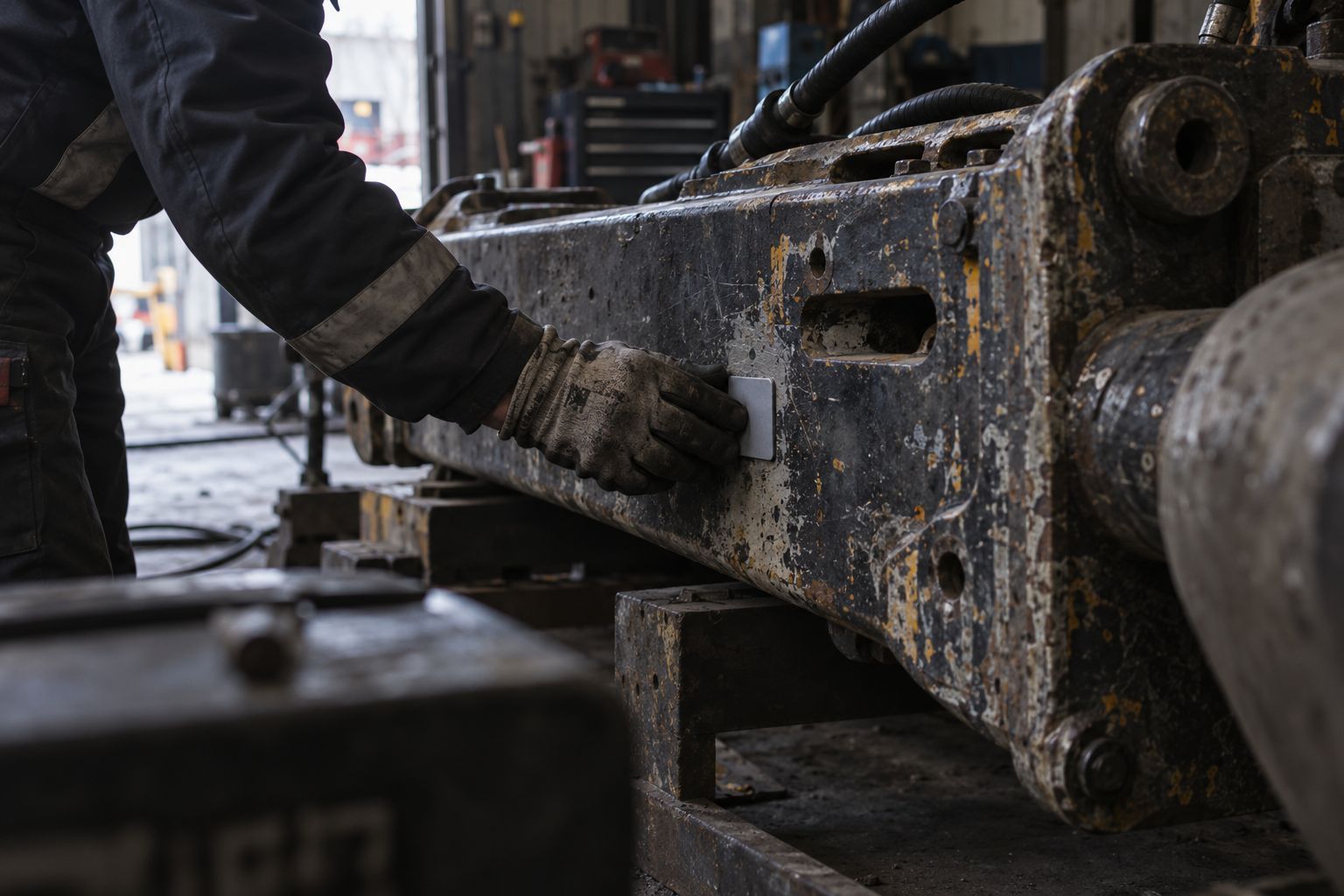
When people say “equipment tracking”, they often mean one thing: a GPS box on a machine that shows a dot on a map. That works for the excavator. It does not work for the bucket, the breaker, the light tower or the box of tools that go with it.
The two technologies answer different questions, so it helps to look at them side by side.
How each one works
A GPS tracker works out its own position from satellites and sends it over a mobile network, usually 4G. It needs a power source, either the machine’s battery or a large internal one, and a data plan.
A Bluetooth tag does not know where it is. It sends a short signal every few seconds. A phone or gateway nearby hears it and reports the position. Because the tag only transmits, it is small and runs for years on one battery. How near depends on the radio and what is in between: the Bluetooth SIG puts the effective range of Bluetooth anywhere from more than a kilometre to less than a metre. That is why tags report a zone rather than a point.
Side by side
| GPS tracker | Bluetooth tag | |
|---|---|---|
| Best for | Powered machines, vehicles | Attachments, tools, anything without power |
| Works on the road | Yes | Only when a phone or gateway is near |
| Works indoors | Poorly | Yes |
| Position | Map coordinates | A zone of your yard or site |
| Power | Machine battery or large internal battery | Small battery, years of life |
| Running cost | Usually a data plan per unit | No data plan on the tag |
| Size | A box to mount | About the size of a matchbox |
For Hirro’s own tags: the standard tag uses a swappable battery that lasts up to 3 to 4 years, and the rugged tag up to 8 years.
Where GPS earns its cost
GPS is the right tool when an asset moves on its own and you need to know where it is between sites:
- Machines that are driven or transported to customers and sites.
- High-value equipment where theft is a real risk.
- Anything you need to follow live on the road.
Many fleets already have GPS on their larger machines through the manufacturer or a telematics provider. That is worth keeping.
Where Bluetooth fits better
Bluetooth is the better fit for the much larger group of assets that have no engine:
- Buckets, breakers, forks and other attachments.
- Generators, pumps, light towers and compressors.
- Tools and kit in stores and workshops.
These outnumber machines on most yards, and they are the ones people search for. A GPS tracker on each would cost too much and would not work well indoors anyway.
Most fleets need both
In practice the question is not which one, but where each one goes. A typical setup:
- GPS trackers over 4G on machines that leave the yard.
- Bluetooth tags on attachments, tools and smaller equipment.
- Staff phones and a few gateways to hear the tags on the yard, in the hall and on the truck.
Hirro shows all three in one inventory. If your machines already carry another tracker, Hirro can work alongside it and add what it misses: the yard, the stages and the attachments.
Questions
What is the difference between a Bluetooth tag and a GPS tracker?
A GPS tracker works out its own position from satellites and sends it over a mobile network, so it needs power and a data plan. A Bluetooth tag only sends a short signal; a nearby phone or gateway hears it and reports where it is. Tags are smaller and run for years on a battery.
Does GPS work inside a hall or a workshop?
Poorly. GPS needs a view of the sky, so indoors and between tall machines the position drifts or drops out. Bluetooth works indoors, as long as a phone or gateway is within range.
Can one system handle both?
Yes. Hirro shows Bluetooth tags, gateways and 4G trackers in one inventory, so a machine on the road and the bucket that belongs to it sit in the same list.
Next step Compare the tags, trackers and gateways.